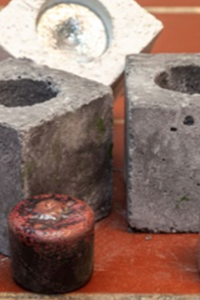
We optimise refractory lining designs for all industries with thermal processes, high-level technology, and a comprehensive approach to cost control regarding consumption and efficiency
Study modules
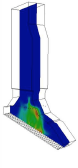
We have 5 different study modules that allow us to simulate the performance of individual parts and complex structures such as tunnel kilns or incineration furnaces. We compare the original design with new proposals in a search for efficiency.
Heateide
The parts are subjected to thermal stress and the resulting stresses are analysed.
Steide
Mechanical stress or loads are applied to locate the critical points of the geometry.
Cfdteide
Simulation of fluid movement to optimise geometry and heat input.
Coteide
Models combustion in an incineration furnace. The analysis provides an understanding of how and where the different reactions take place.
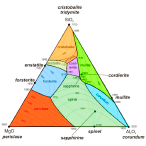
Phaseteide
Allows the optimization of the final composition by modeling virtual phase diagrams.
Optimizing kiln cars to achieve up to 40% in energy savings.
How We Do It
Kiln car design is a direct driver of overall energy consumption.
By engineering the optimal synergy between our pressed and extruded refractories and high-performance insulation products.
We conduct advanced FEM simulations to determine the optimal materials based on each client’s specific kiln thermal balance.
Expert final installation and efficient supervision: the cornerstones of our 360° refractory solutions.
Simulation Process
Objective
To identify opportunities for energy consumption optimization within the client's kiln car system.
Our Methodology
By applying Finite Element Method (FEM) software, we calculate the energy stored in the kiln car throughout the client’s actual operating cycles (ranging from 10 to 80 hours).
Results
Kiln Car Efficiency
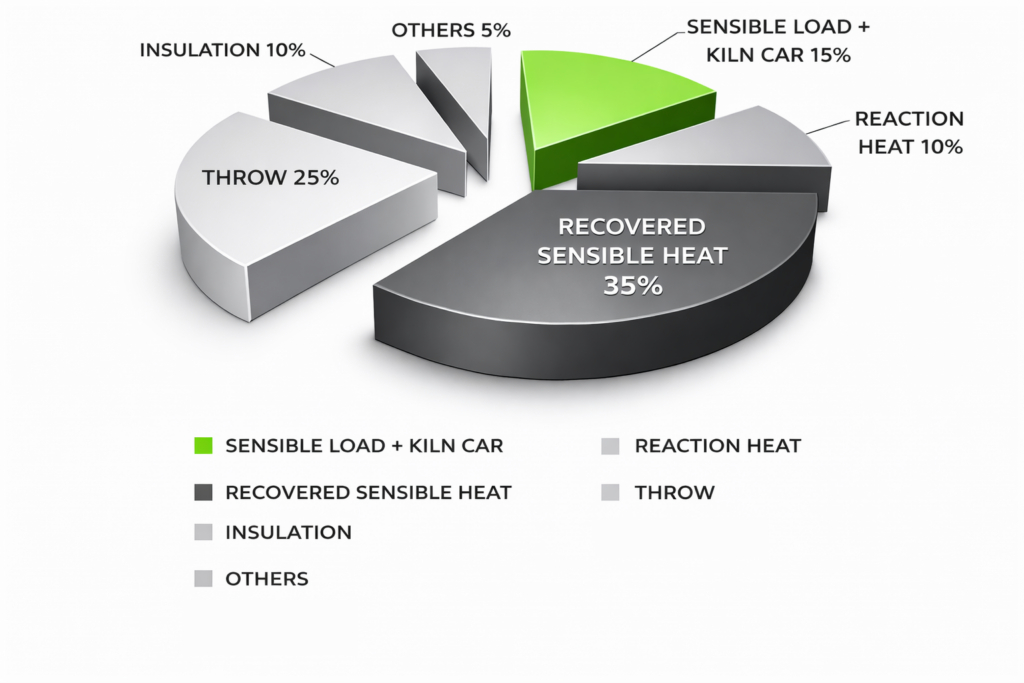
Energy Consumption Analysis
Maximize Your Thermal Efficiency: The Art of Recovering Every Degree of Energy
In the ceramic industry, success is defined not just by what you manufacture, but by the energy you conserve. Understanding your kiln’s thermal breakdown is the essential first step toward a profitable and sustainable operation.
Thermal Balance Optimization
We analyze 100% of the variables, from reaction heat to sensible heat recovery, to minimize losses through TROW and insulation.
Carbon Footprint Reduction
We implement solutions that transform theoretical efficiency into tangible fuel savings, aligning your facility with the stringent energy demands of 2026.
Cutting-Edge Engineering
We don't just supply refractories; we re-engineer your process’s thermal dynamics to ensure every euro spent on energy adds value to your final product.
Test I+D+I
We perform R&D&I tests to maximise performance and anticipate possible incidents in the refractory lining.
Technical characteristics
Density, Mechanical strength, MOR, Porosity, etc
Behaviour at exceptional temperatures
CREEP, Resistance to thermal shock
In-service behaviour
Abrasion, impact, and oxidation resistance
Microstructural characteristics
XRD, XRF, SEM, TGA/DSC
Life cycle analysis
Static and dynamic chemical attack
FAQs
How do you calculate energy savings before making the investment?
We estimate the impact on thermal mass, heat losses, and cycle stability, and compare A/B alternatives before manufacturing. This is consistent with your studies and technical content on kiln cars and heat transfer.
What improvements are typically made to kiln cars to reduce energy consumption?
Low thermal mass designs, optimization of height/configuration, and material selection (cordierite / SiC / insulation by zone) to reduce heat losses without compromising rigidity or stability.
Can energy consumption be reduced without compromising product quality?
Yes, but always under one condition: maintaining thermal uniformity, ramp stability, and repeatability. Validation is done through quality KPIs (reject rate, color, deformation, etc.).
What minimum data do you require for an “energy check” of the kiln/kiln car?
Do you carry out tests or trials before implementing changes?
Yes. We can propose laboratory tests and/or controlled on-site trials to validate performance, durability, and process stability.
What is the difference between a standard solution and a custom formulation?
The standard solution fits typical scenarios; the custom solution is tailored to your actual conditions to improve durability, performance, and total cost.
Tell us about your refractory challenge
Explain your sector, the type of furnace you use, and what you want to improve. A TEIDE technician will review your case and propose the most suitable solution.