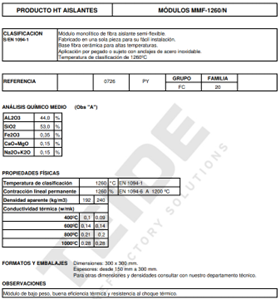
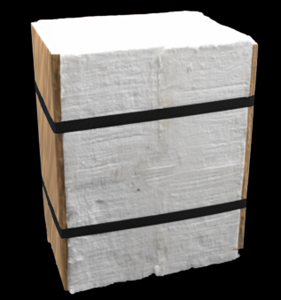
Efficiency and versatility: advantages of TEIDE monolithic ceramic fibre modules
At TEIDE 360 Refractory Solutions we invest in constant innovation to deliver solutions that make a difference in performance and durability. The choice of refractory lining is key to optimising energy consumption and reducing maintenance time. Today we look at why monolithic ceramic fibre modules offer more operational advantages than traditional folded modules.
Monolithic or folded? The key structural difference
Traditional ceramic fibre modules are made by folding the blanket lengthwise. Monolithic modules are designed and compacted as a single, uniform block. This difference in the manufacturing process gives them better mechanical properties against thermal cycling and high-velocity gases.
Main advantages of the monolithic module
- Uniformity on every face. In a folded module, performance can vary depending on the direction of the folds. The monolithic block has a homogeneous density and structure on every side, which removes weak insulation points.
- Faster, simpler installation. Its compact design makes the pieces easier to handle and position. Installation crews work faster, which directly shortens technical shutdown times at the plant.
- Installation versatility. Thanks to its symmetry and consistency around the whole perimeter, the monolithic module can be installed in different ways. It fits precisely on complex geometries, furnace roofs or hard-to-reach areas.
- Longer service life. Because it does not rely on folding stresses, the risk of delamination or surface detachment is considerably lower under extreme operating conditions.
Good insulation means energy savings and safer equipment
Choosing the right insulation delivers direct energy savings and greater safety for your equipment. Monolithic modules combine strength, efficiency and excellent installation flexibility.
💬 Not sure which solution suits your furnaces? Talk to our technical team.